Event 10

Community Partner Added

As the project expands, Dr. Brown wants to bring in a community organization. Marcus must help determine whether the organization should be treated as a contractor or a subrecipient before work begins.

Year 2 Event 10 Subrecipient Determination

Story Background

The project is growing beyond the university

The Community Access to Preventive Healthcare Initiative is entering a period of growth. Participant recruitment is increasing, and the project team wants to expand outreach efforts into additional communities.

Dr. Brown identifies Community Health Access Network, known as CHAN, as a potential partner. CHAN has deep community knowledge, trusted local relationships, and experience working with residents who may be difficult to reach through traditional university-led outreach.

Karen Mitchell, CHAN’s Executive Director, is interested in supporting the project. Her organization can help strengthen recruitment, coordinate community outreach, and connect the project with local leaders.

Before CHAN begins work, Marcus must answer an important administrative question: does CHAN’s proposed role look more like a contractor relationship or a subrecipient relationship?

New Partner

Meet Karen Mitchell and CHAN

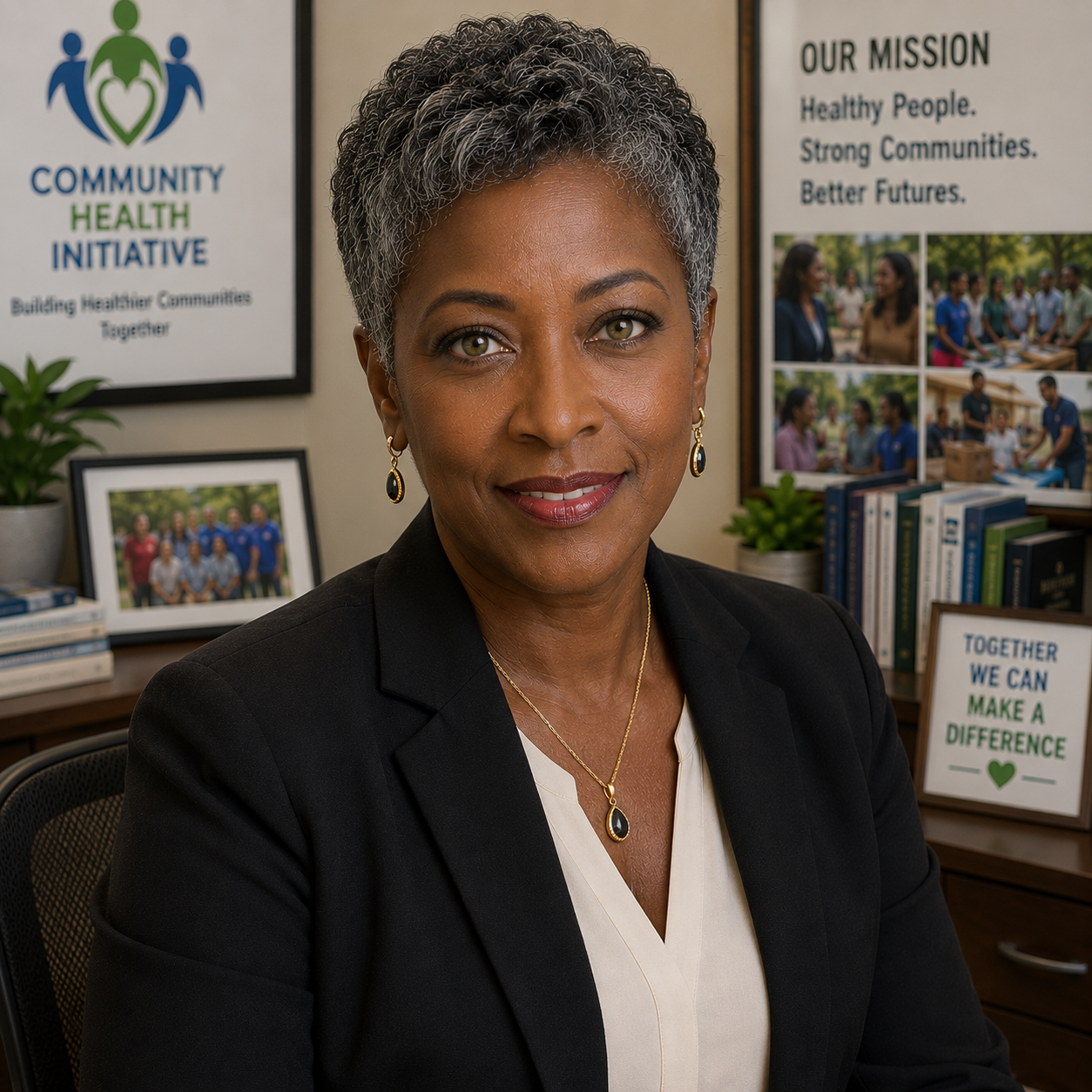
Portrait of Karen Mitchell

Executive Director | Community Health Access Network

Karen Mitchell leads Community Health Access Network, a nonprofit community health organization focused on outreach, healthcare access, and engagement in underserved communities.

Karen’s team brings community expertise that the university does not have on its own. They understand local barriers, trusted partners, and outreach methods that can help the project reach participants more effectively.

Organization Community Health Access Network
Organization Type Nonprofit Community Health Organization
Proposed Role Community outreach and recruitment support
Key Question Contractor or subrecipient?

Karen’s guiding question: “How will this help the people we’re trying to serve?”

Trigger Issue

Dr. Brown wants to add CHAN to the project

Core Question

Not all external organizations are treated the same

When an outside organization receives project funds, Marcus cannot classify the relationship based on payment alone. He must review the nature of the work and follow the institution’s process for documenting the determination.

Contractor

A contractor provides routine goods or services in a commercial relationship.

  • Provides standard services
  • Operates in a commercial environment
  • Does not direct project activities
  • Does not make programmatic decisions

Subrecipient

A subrecipient performs a substantive portion of the sponsored project.

  • Contributes programmatic expertise
  • Participates in project implementation
  • Influences project outcomes
  • Assumes responsibility for part of the work

The classification affects the agreement structure, monitoring requirements, financial oversight, reporting expectations, and compliance responsibilities.

What Marcus Reviews

The determination depends on CHAN’s role

Community Partner Proposal

Describes why CHAN is needed and what value it brings to the project.

Draft Statement of Work

Explains the activities CHAN would perform, deliverables, responsibilities, and expected outcomes.

Subrecipient Determination Checklist

Helps Marcus compare contractor and subrecipient characteristics.

Project Objectives

Clarify whether CHAN is helping achieve the funded project’s programmatic goals.

Budget and Payment Structure

Helps identify whether CHAN is being paid for routine services or responsible for part of the project.

Marcus’s Evaluation Notes

Document the basis for the classification review before work begins.

Classification Review

Which description best fits CHAN?

Subrecipient Determination Snapshot

Community Health Access Network

Determination Needed
Review Question Evidence Indicator Status
Will CHAN help achieve project objectives? Yes, through outreach and recruitment support Subrecipient Strong indicator
Will CHAN provide community expertise? Yes, trusted local relationships and engagement strategy Subrecipient Strong indicator
Is CHAN only providing a routine service? No, role affects project implementation Not contractor Needs subaward review

CHAN is not simply selling a standard service. CHAN is helping carry out part of the project and contributing expertise that affects project outcomes.

Decision Point

How should Marcus classify the relationship?

CHAN will support outreach strategy, participant recruitment, and community engagement. The organization brings expertise and will help carry out project objectives. What is the best classification?

Resolution

Marcus documents that CHAN appears to meet subrecipient characteristics

Marcus does not make this decision casually, and he does not treat the relationship as a subaward simply because CHAN will receive project funds. He reviews the proposed work and documents why CHAN appears to be carrying out part of the sponsored project rather than providing only routine services.

Subrecipient Determination Notes

Prepared by Marcus Rivera

Issue Reviewed Dr. Brown proposes adding CHAN to support community outreach and participant recruitment.
Records Reviewed Community partner proposal, draft statement of work, determination checklist, project objectives, and budget information.
Administrative Finding CHAN appears to meet subrecipient characteristics because it will participate directly in project activities and contribute expertise that supports project objectives.
Role Boundary Marcus documents and coordinates the determination process. The formal subaward review, issuance, negotiation, approval, or signature may be handled by a central sponsored programs, contracts, or subaward office.

The key lesson is not that Marcus personally creates the subaward. The key lesson is that he identifies the relationship type, documents the basis for review, and coordinates with the appropriate institutional process before CHAN begins work.

Next Step

Marcus coordinates the next steps for subaward routing and planning

Once CHAN appears to meet subrecipient characteristics, Marcus does not create or approve the subaward on his own. He coordinates with the appropriate institutional office, helps gather the required information, and makes sure the project team understands what must be in place before CHAN begins subrecipient work.

Role Boundary

Who does what may vary by institution

At some institutions, a departmental research administrator helps gather materials and track the process. A central sponsored programs, contracting, procurement, or subaward office may prepare, negotiate, issue, approve, or execute the agreement.

For this training, Marcus’s role is to recognize the issue, document the basis for the determination, coordinate with the correct office, and help ensure monitoring and reporting expectations are clear before work begins.

1. Document the determination basis

Marcus documents why CHAN appears to be a subrecipient instead of a contractor. The file should explain that CHAN will contribute programmatic expertise, support implementation, and help carry out part of the funded work.

2. Coordinate with the appropriate office

Marcus routes the matter through the institution’s process. Depending on local policy, this may involve sponsored programs, contracts, procurement, a subaward team, or another central office.

3. Gather the scope and budget

The project team must clearly describe CHAN’s scope of work, deliverables, timeline, budget, payment structure, and connection to the approved project goals.

4. Clarify reporting expectations

CHAN should know what reports are required, how often they are due, who receives them, and what information must be submitted before invoices can be reviewed and approved.

5. Plan for monitoring

Because the university remains accountable to the sponsor, Marcus helps identify how CHAN’s performance, spending, invoices, deliverables, and documentation will be monitored during the project.

6. Pause before work begins

CHAN should not begin subrecipient work until the appropriate agreement, approvals, reporting expectations, monitoring process, and documentation requirements are in place.

Why this matters

A subaward creates responsibilities for both the university and CHAN. The university remains accountable to the sponsor for the full award, even when another organization carries out part of the work.

Marcus’s work helps prevent the project from moving ahead informally before the relationship, scope, budget, reporting expectations, and monitoring responsibilities are documented through the proper institutional process.

Common Misconceptions

What learners should not assume

“Any organization receiving money is a subrecipient.”

Payment alone does not determine classification. The nature of the work is the determining factor.

“Community organizations are always contractors.”

Community organizations can function as contractors or subrecipients depending on their project role.

“This is mainly a financial decision.”

Subrecipient determination is based on project responsibilities, participation, programmatic expertise, and relationship to project outcomes.

Resources

References behind this scenario

These references show why correct classification matters before work with an external organization begins. A post-award research administrator must review the nature of the work, document the relationship, coordinate with the appropriate institutional office, and understand the monitoring responsibilities that follow if the organization is a subrecipient.

2 CFR 200.331 — Subrecipient and Contractor Determinations

This federal requirement explains that pass-through entities must make case-by-case determinations about whether another organization is acting as a subrecipient or a contractor.

Connection to Event 10: CHAN’s classification depends on the nature of its proposed work, not simply on the fact that it will be paid.

2 CFR 200.332 — Requirements for Pass-Through Entities

This federal requirement explains responsibilities that apply when a pass-through entity provides federal funds to a subrecipient, including award information, risk review, monitoring, and follow-up expectations.

Connection to Event 10: if CHAN is treated as a subrecipient, Crescent State University has monitoring responsibilities.

Statement of Work

The statement of work describes the activities, deliverables, responsibilities, timeline, and expected outcomes for the external organization.

Connection to Event 10: the statement of work helps show whether CHAN is carrying out project work or providing routine services.

Institutional Subaward Procedures

Institutional procedures explain how the university documents determinations, routes subaward requests, establishes agreements, and assigns responsibility for review, approval, and execution.

Connection to Event 10: Marcus must follow the institution’s process rather than treating the relationship as an informal partnership.